
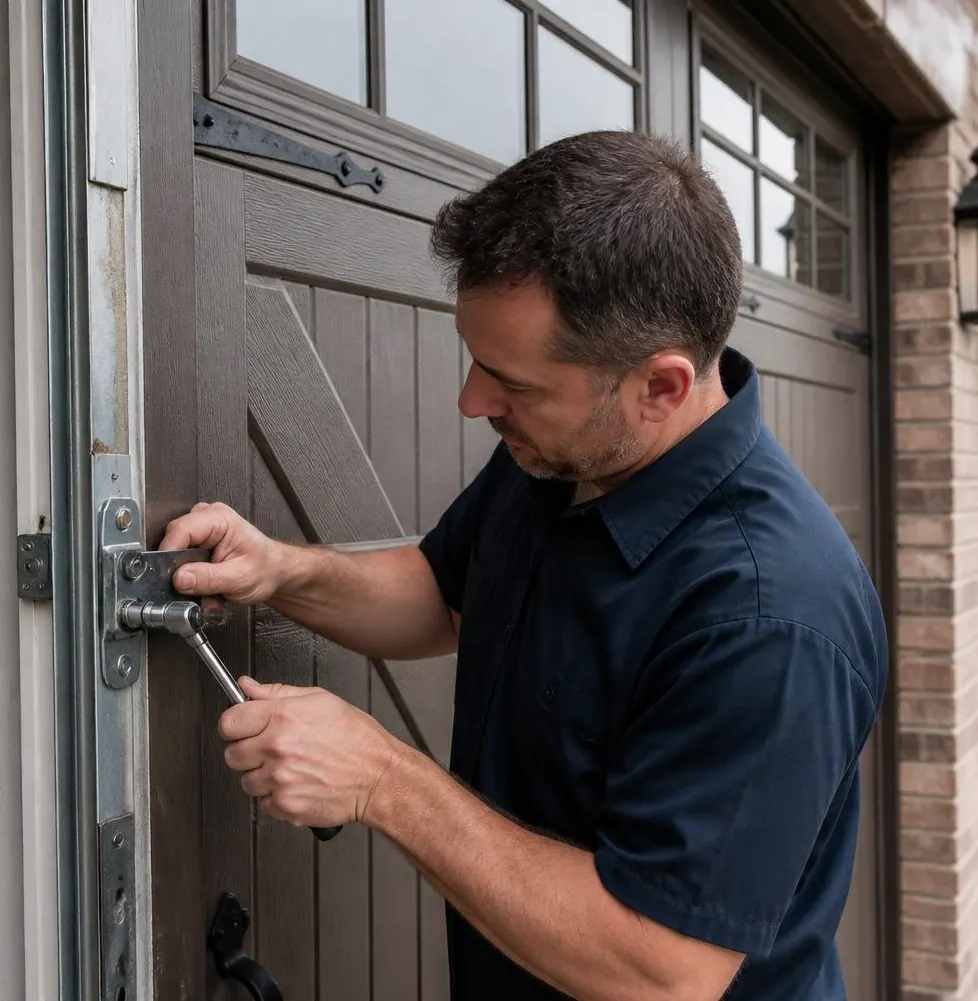
What a Technician Sees on the First Cold-Snap Call
Every year it's the same pattern: the door worked fine through September, then the first hard freeze hits and the phone starts ringing. A homeowner presses the remote and the door groans halfway up, stalls, or moves so slowly it looks like it's thinking about it. Sometimes the opener strains and clicks off. Sometimes the door reverses right after it touches the floor for no clear reason. Almost always, it's the same root causes: a spring that's lost tension and now has to fight stiff, cold metal and dry hinges; weatherstripping that's cracked or gone stiff and is letting in drafts and moisture; or sensors that got bumped or dirty over the summer and are now extra sensitive to the low morning sun and condensation. None of this is exotic. It's just what a garage door built for Northeast Ohio's seasonal swings needs before winter actually arrives.
Check the Springs Before They Check You
Torsion and extension springs lose a bit of lift capacity as temperatures drop, and in a cold garage that's attached to a cold driveway, that loss gets noticed fast. If your opener has been working harder than usual, or the door feels heavier when you lift it manually with the opener disconnected, that's a sign the spring tension needs adjusting before winter puts more strain on it. This is not a DIY adjustment — torsion springs are under serious tension and a slip can cause real injury. What a homeowner can safely do is watch for warning signs: a door that doesn't stay put halfway open, visible gaps in the spring coil, or a loud bang from the garage (a sign a spring may have already failed). If you hear that bang, don't run the opener again — call for spring replacement before you use the door.
Weatherstripping and Seals: Your First Line Against Ice and Salt
The rubber seal along the bottom of the door and the weatherstripping around the frame take a beating every winter from salt, ice chunks, and plows pushing snow up against the garage. By October, it's worth getting down and actually looking at the bottom seal — if it's cracked, flattened, or has gaps where daylight shows through, it's not going to keep out melting snow or road salt brine this winter. A bad seal doesn't just let in cold air; it lets in moisture that can freeze the door to the floor overnight, which is a common reason doors won't open on the coldest mornings. Side and top weatherstripping matters too, especially on garages that share a wall with living space, since gaps there turn into drafts that show up on the heating bill. Replacing weatherstripping is inexpensive and one of the highest-value things you can do before winter.
Lubricate Before It Gets Cold, Not After
Cold makes dry metal louder and stiffer. Rollers, hinges, and the torsion spring itself all benefit from a garage-door-specific lubricant (not WD-40, which is a solvent and actually strips lubrication over time) applied now, while it's still easy to get into the garage comfortably and the grease has a chance to work in before temperatures drop. Pay attention to the track too — not lubricant there, but a wipe-down to clear out summer dust and cobwebs that can mix with winter moisture and gum up the rollers. A door that's quiet and smooth in October tends to stay that way through January; one that's already squeaking now will likely be groaning by December.
Openers, Sensors, and the Cold-Weather Quirks They Bring
Photo-eye safety sensors near the bottom of the tracks can get thrown off by condensation, morning frost, or even low winter sun hitting them at the wrong angle — all of which show up more in late fall and winter than in summer. If the door reverses unexpectedly or won't close at all, wipe both sensor lenses clean and make sure they're still aligned; a sensor that was fine all summer can get nudged by a stored bike, a broom, or a kid's bag over months of use. It's also worth checking the opener's battery backup (if it has one) before winter storms knock out power, and testing the manual release so you know how to operate the door by hand if the opener ever fails on a cold night when you need to get the car out.
Garage Insulation and Temperature Swings
With the big swings this area sees — humid summers into cold, salted winters — an uninsulated garage door expands and contracts more than homeowners expect, and that movement is part of what loosens hardware and strains weatherstripping over time. If your garage is attached to the house or you use it as workspace, an insulated door or an insulation kit for an existing door helps even out those swings and makes the door itself last longer, on top of the comfort benefit.
When to Call Chagrin Falls Garage Door Works
If you've checked the seals and lubricated the moving parts but the door still struggles, sounds off, or you hear that bang that signals a broken spring, it's time to call rather than push through winter with a door that's already telling you it's in trouble. We handle spring replacement safely with the right tools and tension gauges, and we do full garage door maintenance visits that cover the hardware most homeowners can't easily inspect themselves — track alignment, cable wear, and opener calibration. If a storm knocks your door out of commission entirely, our emergency garage door service means you're not stuck waiting until regular hours to get back into a working garage.
Don't wait for the first single-digit morning to find out your garage door wasn't ready for it. Call Chagrin Falls Garage Door Works today to get your door checked, adjusted, and winter-ready before the cold really sets in.